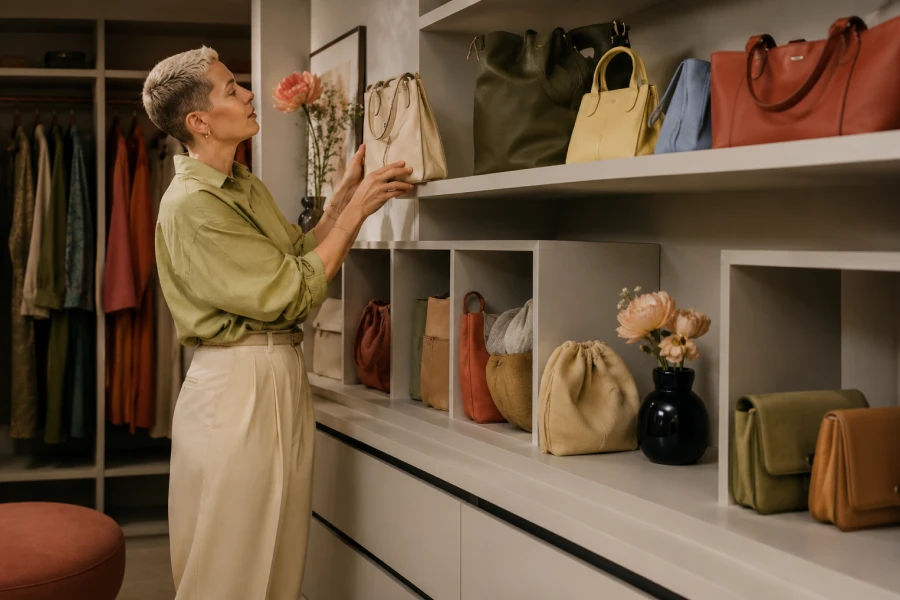
A handbag carries the shape of its daily life. Receipts, loose coins, weather, and crowded shelves leave their marks. That is why how to store handbags belongs in the after-use routine. Good storage does not require a boutique-sized closet. It requires an empty interior, gentle support, and a stable landing place. Those basics keep straps straighter and panels smoother. They also make your collection easier to see and use. A bag should not need rescuing before the next outing. It should wait in a way that respects its construction. Once you create that pattern, putting a bag away becomes simple.
The moment you come home creates the easiest care opportunity. Empty every pocket before the bag reaches a shelf. Remove receipts, wrappers, pens, and anything with weight. Shake out crumbs with the bag held gently upside down. Wipe the interior with a soft dry cloth when needed. Check corners, closures, and straps for small changes. This small reset prevents hidden weight from altering the silhouette. Keep handbag storage solutions where you can use them without searching. The work takes less time than finding a missing item later. A clean bag begins storage with a clean slate. You will also notice fewer surprises when you reach for it next.
Once the interior is empty, think about support. Soft clean tissue or cloth can hold a bag open without stretching it. Fill the base first, then support sidewalls and handles lightly. The aim is to preserve the original line, not force a perfect display shape. Avoid newspaper because ink can transfer into pale linings. Keep chains wrapped separately so metal does not press into leather. Use purse dust bags for occasional pieces that benefit from extra protection. Leave closures lightly fastened so edges do not pull. Different bags need different amounts of fill. Gentle support is more useful than overstuffing.
Structured bags respond badly to pressure from neighboring pieces. Give each one enough shelf width to stand on its own. Avoid stacking unless the bags are soft pouches designed for it. A vertical divider can stop one tote from leaning into another. Keep handles upright when the design allows it. Store clutches flat with a soft layer between them. Do not hang a heavy bag from one narrow hook. That can stress the handle attachment over time. The most attractive arrangement is often the least crowded one. Space is a form of support too. Shelf space earns its value when it prevents repeated repairs and reshaping.
Choose shelves that let you see the bag without moving three others. Place the tallest structured styles first, then fill in smaller pieces. Keep frequently used bags at waist or eye level. Reserve higher shelves for dust-covered occasion bags. A simple set of bag shaper inserts can help fragile silhouettes stay balanced. Use a shelf liner if the surface feels rough or unfinished. Avoid forcing large totes into low cubbies. Do not let straps hang under a heavy shelf edge. The layout should protect the collection while serving your real routine. A useful shelf prevents both clutter and creasing. Climate-aware storage keeps materials stable through changing conditions at home.
Environmental conditions matter as much as the shelf itself. Strong sun can fade leather, fabric, and trim. Heat can dry out a finish and stiffen adhesives. Humidity can create odor, mildew, and warped linings. Skip damp basements, hot cars, and sealed plastic bins. Keep bags away from radiators and direct window glare. Let wet pieces dry naturally before storage. A stable room temperature is kinder than dramatic fluctuations. Check long-stored bags after a humid season. The right location reduces problems before they become visible. Consistency matters because it protects the bag without relying on memory. That prevention is easier than correcting a warped lining later.
A repeatable ending keeps the system from becoming another chore. Empty the bag, wipe it, support it, and return it. Keep dust covers, filler, and spare straps together nearby. Reserve one shallow tray for chains and detachable accessories. Review the shelf twice each year for crowding or forgotten pieces. Rotate bags that have been sitting unused for too long. Repair loose stitching before it travels across a strap. Keep special items in their original boxes only when those boxes remain dry. The ritual protects your choices without demanding much time. That is what makes it sustainable in a busy week.
Handbag storage is most effective when it feels almost invisible. The bag comes home, receives a short reset, and rests in its place. Its shape stays recognizable because weight and pressure stay under control. You find it easily because nothing is buried behind clutter. Start with the pieces you carry most often. Then extend the habit to the rest of the collection. Clear interiors, soft support, and stable shelves solve most issues. Add protection where materials or climate make it necessary. Soon, every bag looks more ready for use. That is the real luxury of a well-organized shelf. Every returned bag then becomes a simple part of a collection that works.



Leave a comment