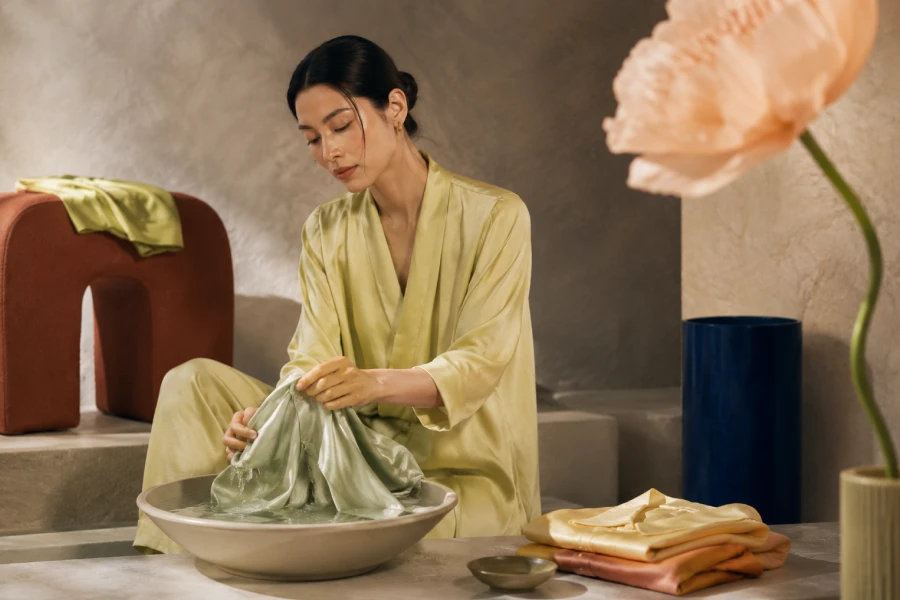
Silk asks for attention, not anxiety, on laundry day. Its surface reacts quickly to heat, friction, and leftover product. That is why how to wash silk clothing starts before the garment reaches water. A brief label check replaces guesswork with useful direction. It also reveals linings, dyes, and finishes that need restraint. The fabric may look resilient while its fibers remain surprisingly fine. Small decisions protect the glow that makes silk feel special. You do not need a complicated collection of supplies. Clean hands, cool water, and patience cover most situations. Once the sequence becomes familiar, care feels like a calm reset.
Treat the label as a conversation with the garment. It tells you whether home washing makes sense at all. Pure silk, blends, and heavily structured pieces can need different choices. Look closely at seams, stains, and areas with body oil. Notice whether dye seems unstable near an inside edge. That inspection helps you separate an ordinary refresh from a professional-cleaning situation. Keep a dependable silk washing routine close for pieces you wear often. Preparation is not fussy when it prevents a permanent mark. It also stops a rushed decision after the water is already running. A few careful seconds set up every later step.
Begin with a perfectly clean basin rather than a crowded sink. Fill it with cool or lukewarm water before adding fabric. Let a modest amount of delicate fabric detergent dissolve completely. Suds should be light rather than thick and dramatic. Lower the garment slowly, supporting its weight with both hands. Let water move through the fibers without forcing it. Keep zippers, rough towels, and heavy laundry well away. A quiet setup limits accidental snagging and uneven exposure. It also gives you a clearer sense of what the fabric needs. The best wash begins with an environment that does not fight the material.
Hand washing creates room to observe instead of rushing. Press the fabric gently below the surface, then release it. Use slow sweeping movements rather than rubbing one spot repeatedly. Let the water loosen everyday soil on its own. For a small mark, blot from the edge toward the center. Never twist silk into a tight rope to remove moisture. That motion can distort seams and weaken the finish. Rinse with water at a similar temperature to avoid shock. Support the garment when lifting it from the basin. Control, not force, produces the cleaner result. You can see the result in a smoother surface and calmer seams.
Imagine the fabric as something you are guiding, not conquering. A few gentle passes are usually enough for light wear. Keep soak time brief unless the care label says otherwise. Heavy scrubbing can flatten shine and create rough-looking patches. Stubborn stains deserve a separate decision instead of more pressure. Use hand wash silk techniques that favor blotting and patience. If the mark remains, pause before adding stronger products. Some silk pieces benefit more from professional attention than experimentation. Restraint protects the fabric when the right answer is uncertain. That choice preserves both color and confidence. Careful motion leaves the weave looking even, soft, and naturally luminous.
Drying changes the final look as much as washing does. Lay the piece flat on a fresh absorbent towel. Arrange sleeves, hems, and collars into their intended shape. Roll the towel loosely to remove extra water. Then move the garment onto another dry surface. Direct sun can fade color before the fabric feels dry. Radiator heat can harden or shrink sensitive areas. A low-steam finish later works better than pressing a damp piece. Keep the iron on the reverse side with a pressing cloth. Let time do the work that heat cannot. Unhurried air drying preserves the subtle finish that high heat can erase.
The wash lasts longer when the garment rests well afterward. Air it fully before it returns to a closet or drawer. Keep breathable space around delicate pieces after they dry. Padded hangers suit some lightweight styles, while folds suit others. The right silk drying methods make that storage decision easier. Avoid plastic that traps humidity beside the fibers. Reserve sealed containers for situations where the fabric is completely dry. A cool dim area protects color between wears. Good storage turns one careful wash into a longer-lasting result. That is where laundry becomes preservation. The garment then returns to storage with its shape and finish intact.
A well-cared-for silk piece tells the story quietly. It keeps its movement, color, and soft hand over time. You notice the difference when it leaves the hanger ready to wear. You also avoid emergency cleaning before an event. The routine does not need to become a ceremony. It simply needs a clear order and gentle materials. Read the label, prepare the basin, and resist unnecessary force. Dry flat, control heat, and store each piece thoughtfully. Those habits make luxurious fabric feel practical in real life. They also keep your favorite pieces in rotation much longer. Over time, the method becomes instinctive because every step has a clear purpose.




Leave a comment