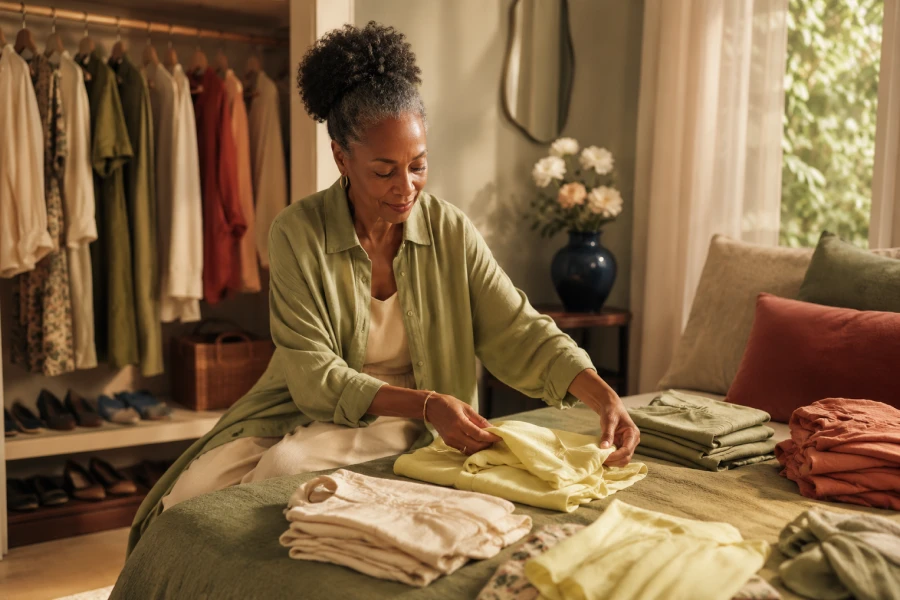
A thoughtful wardrobe is not built by denying every new idea. It is built by making sure each new idea has somewhere to go. Buy less wear more gives that decision a useful frame. It asks you to choose pieces with a future beyond one exciting moment. The question is not whether an item is beautiful. The question is whether it will become part of your life. That shift creates room for personal style rather than reducing it. You start noticing fabric, fit, repair, and outfit potential. Purchases become fewer, but often much more satisfying. The closet gains clarity because every addition has a reason.
Before you buy, ask concrete questions instead of relying on mood. What three outfits can this piece join immediately? Will you wear it in the next month? Does it suit your climate, schedule, and care capacity? Can it replace something worn out or difficult to use? Keep a small low-buy fashion routine for moments when browsing becomes automatic. A list of questions slows the decision without removing pleasure. It also reveals when an item only works in an imagined version of life. Clear questions create clearer purchases. They turn hesitation into useful information. Better questions create enough distance to recognize when the answer is no.
Shopping becomes different when you look for connection first. Instead of asking what is new, ask what is missing. Bring a photo of your closet colors if that helps. Check fabric content before falling for a silhouette. Try the item with your own shoes and layers when possible. Leave it behind if it needs several other purchases to work. Compare the price with expected use, not only with the sale sign. Take a day to think when the choice feels uncertain. A deliberate purchase can still feel exciting. It simply has more evidence behind it. Each small comparison reveals whether an addition will genuinely earn repeat use.
Every new item should meet the wardrobe it is entering. Pull out several existing pieces and test the match. Notice whether the scale, color, and fabric work together. A garment that only pairs with one item may have limited value. Look for ways it can move from weekday to weekend. Use intentional wardrobe shopping to focus on combinations instead of isolated products. Avoid buying a whole outfit just to justify one impulse. Let an addition prove itself against what you already love. The best pieces create more options without creating more clutter. That is how personal style stays visible. An item with real connections becomes more expressive each time you wear it.
Price alone cannot show whether a purchase is worthwhile. Consider how often you will use the item. Think about alterations, cleaning, storage, and repairs too. A simple cost per wear thinking practice makes those factors easier to compare. A higher price can make sense when the piece fills a lasting role. A bargain becomes expensive when it stays unworn. Do not confuse scarcity marketing with personal need. Give yourself permission to skip something beautiful. Value comes from use, not from the thrill of acquiring. That principle supports both money and style. Value grows when the purchase continues working long after the original excitement fades.
Owning less is not the only point. The point is owning with more intention and enjoyment. You can keep color, texture, and unexpected pieces in your wardrobe. The difference is that they should have a place in your life. A small collection can be expressive, and a larger one can be thoughtful. Avoid turning minimalism into another style requirement. Focus on how clothing supports comfort and self-expression. Let your preferences lead the edit. The best wardrobe is not measured by a number. It is measured by how often it serves you. Personal style thrives when it is supported by useful choices rather than rigid limits.
Practice makes the pause feel less like restraint. Start by delaying one purchase each week. Wear a favorite combination before searching for a replacement. Repair one item that you might have discarded. Keep notes about the purchases that brought real value. Notice which stores or apps trigger unplanned browsing. Unsubscribe from messages that create urgency without need. Give yourself time to discover your own repeating patterns. Each small action strengthens the habit. Over time, deliberate buying becomes your default. Style grows quieter, clearer, and more personal. Practice builds trust in your ability to choose well without acting immediately. Those moments gradually build a wardrobe that feels more intentional.
Buying less does not mean dressing with less imagination. It means asking each piece to join a story already in progress. Test new ideas against real outfits and real days. Consider value through use, care, and versatility. Let attractive things earn their place rather than arriving by impulse. That process protects your budget without flattening your personality. It also makes the closet easier to navigate. The pieces that remain become more familiar and more useful. You begin to trust your own judgment instead of every new trend. That is a durable foundation for personal style. The wardrobe becomes easier to enjoy because each item has a clearer relationship to your life.

Leave a comment