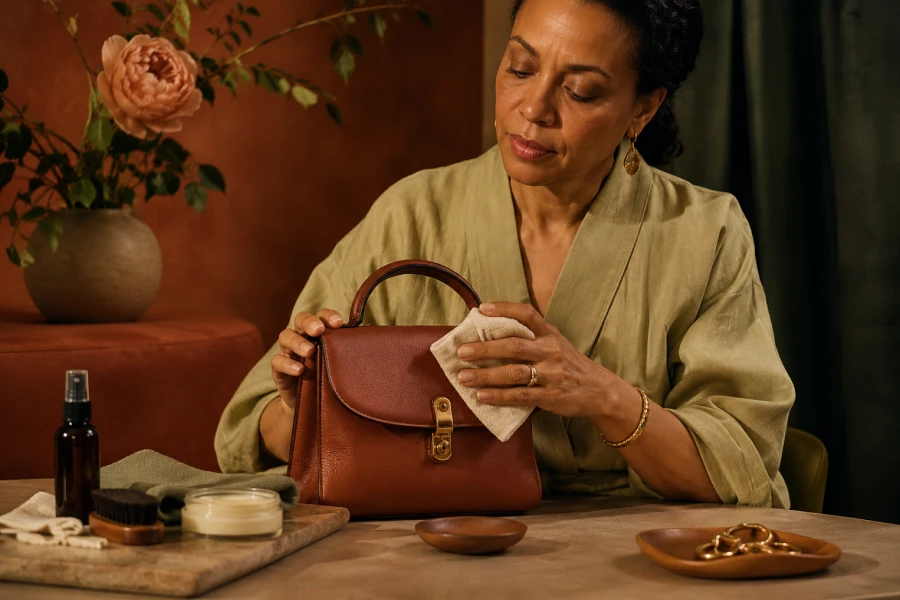
A handbag collection works best when it reflects real days, not catalog styling. The pieces you carry each week need a different home than special-occasion bags. That is where handbag organization ideas become genuinely useful. They turn a shelf into a small system for deciding quickly. The result is less searching, less reshaping, and fewer forgotten favorites. Good organization does not hide every object away. It gives each one a clear role and enough room. You can build that with ordinary shelves, dividers, and a little observation. Start with how you leave the house, not with matching containers. The most practical setup will still look beautifully considered.
First, separate the bags you use weekly from those you use rarely. Daily pieces deserve the easiest shelf or hook zone. Work bags should sit near their chargers, keys, or travel essentials. Evening clutches can rest farther back without becoming inaccessible. Group by function before you group by color. That order mirrors how decisions happen on a busy morning. Use handbag shelf organization that keeps your most useful pieces visible. Place a small catchall tray nearby for detachable straps. The area becomes more intuitive when every action has a nearby tool. Accessibility is the foundation of a system you will actually keep.
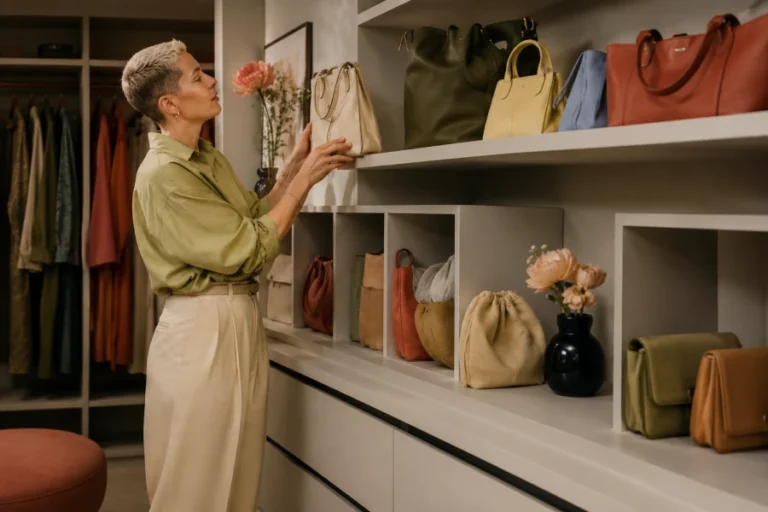
Eye-level storage should earn its place. Give it to the bags you reach for without thinking. Arrange those bags upright with a little visible space between them. Let their handles and closures face forward when possible. You can identify each option without pulling it from the shelf. Use clear dividers if one tote tends to lean. Reserve the highest cubbies for lightweight or seasonal pieces. Good structured purse storage keeps tall bags from slumping under their own weight. Avoid packing several shapes into one narrow compartment. Visibility makes the morning choice calmer and much faster. Once the zones work, a loose pile loses almost all of its appeal.
A pile may look relaxed, but it often hides the right bag. Create separate zones for work, errands, travel, and events. Add one section for bags that need cleaning or repair. Keep small pouches together in a shallow basket. Store detachable chains in a soft pouch beside their matching bag. Make the zones flexible enough to change with your calendar. A weekend routine may need different access than a workweek routine. The system should respond to your life rather than discipline it. When categories feel useful, maintenance takes almost no effort. Order becomes a byproduct of practical thinking. Rotation keeps a useful collection from becoming a set of forgotten objects.
Seasonal shifts are a good reason to edit the shelf. Move warmer-weather colors forward when you begin wearing them. Bring travel bags closer before a period of planned trips. Store out-of-season pieces with a light filler and cover. Use handbag storage ideas that protect delicate finishes during long rests. Check for dust, odor, and pressure marks as you rotate. A quarterly review prevents one shelf from becoming permanent storage chaos. It also helps you notice bags that no longer fit your routine. Those observations can guide future purchases. Seasonal organization is less about fashion rules than useful access. Function and beauty can coexist when the shelf does not carry unnecessary clutter.
Your bag shelf does not need to look anonymous. Place one favorite piece where you will enjoy seeing it. Use a low vase, tray, or simple bookend only if it does not crowd the bags. Let materials and colors create interest instead of adding many decorations. Soft lighting can help you notice leather condition more easily. Avoid intense light that slowly fades dyes. Keep the floor clear under hanging bags. Give each display object a reason to be there. The most attractive shelves have breathing room. They feel personal because the collection itself is the visual story. Personal details matter most when they do not interfere with access or protection.
Every system needs a reset point. Choose one evening each month for a quick shelf check. Return bags that drifted into bedrooms, cars, or entryways. Remove receipts and small items from interiors. Wipe shelves before dust turns into a larger project. Replace filler that has flattened or shifted. Move bags back into their functional zones. Take a moment to decide which pieces deserve repair or donation. That small review keeps storage aligned with how you live now. A system stays useful when it evolves quietly. You do not need perfection to keep it working. The reset also reveals where the arrangement can become even more useful.
The strongest organization ideas eliminate small barriers to getting dressed. You can see the bag, reach it, and return it in seconds. You also protect shape because every piece has enough room. Divide by use first, then refine by size or material. Bring seasonal bags forward before you need them. Keep accessories close but not inside the bags. Let shelves breathe instead of turning them into packed displays. Check the layout often enough to catch drift early. That rhythm produces a collection that serves both style and routine. It makes every closet shelf work with more purpose. The final layout should make the next decision feel easier than the last.


Leave a comment